India takes up AWACS programme for air superiority

India has just taken up development of the Rs 6,000 crore Airborne Warning and Control System (AWACS) that will have the capability to penetrate "longer distances" enemy territory by way of radars and electronic warfare systems without venturing into the region physically, a top defence official said on Friday.

Scientific Advisor to Defence Minister, Secretary in the Department of Defence (R&D) and Director General of Defence Research and Development Organisation (DRDO) VK Saraswat said DRDO just started the programme, after clearance from the government recently.

Asked how it's different from the indigenous Airborne Early Warning and Control (AEW&C) system, he said: "AWACS is a heavier and high endurance system, which can give you in terms of coverage about 360 degrees as against AEW&C which is about 270 degree coverage."

In addition, (compared to AEW&C) AWACS flies at a higher altitude and it can penetrate into the enemy territory - not physically - (but) by way of radars and EW (electronic warfare) systems to longer distances and it can be in sky for larger durations, besides giving better visibility.

Both has a role. All over the world, people have AEW&C and AWACS in a tandem mode because each one does its role and that's what our country is also doing", Saraswat said.

He said two AEW&C aircraft would be ready this year, adding, "By 2014, we will complete delivery of all the three aircraft (AEW&C) to Indian Air Force".

Meanwhile, Saraswat also said that the DRDO has conducted a flight of "guided bomb". "It's a bomb which can fly for about 40-50 or even more kilometres in a guided mode and it can be released from an aircraft," he said

He said the guided bomb is a totally indigenous effort, from designing, development and realisation including explosive content in them, as also guidance and control.
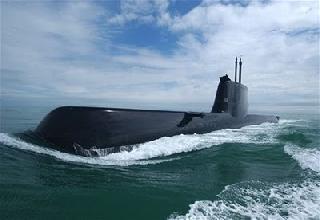
China mulls buying Russian submarines


State arms exporter Rosoboronexport has signed a framework agreement
with China on the joint development and construction of four non-nuclear
Amur-1650 conventional submarines for the Chinese Navy, a news report
said Thursday.

The final contract is tentatively worth $2 billion and is expected to be signed
by the parties no earlier than 2015, Kommersant reported.

The agreement stipulates for two of the submarines to be built in Russia and
two in China, with special provisions in place in the contract to ensure that no
intellectual property is copied from the Russian side, a source close to
Rosoboronexport told the business daily.

An additional agreement for the first stage of work could be signed by the end
of the year, he said, adding that a Russian contractor had not yet been selected
for construction of the submarines.

China may become the first buyer of the Amur-1650 submarines, beating out
India and Venezuela, both of which previously expressed interest, Kommersant
said.

Another source close to the arms exporter said the submarine contract "is very
important for Russia and tops the presidential list of projects with China."

WZ-10 armed helicopters in flight training


An army aviation brigade under the Nanjing Military Area Command (MAC) of the Chinese People's
Liberation Army (PLA) organizes a helicopter flight training, in a bid to temper the tactical skills of the pilots and the helicopter operation-and-control capability.

Cheng Jianzhong, chief of staff of an army aviation brigade under the Nanjing Military Area Command (MAC) of the Chinese People's Liberation Army (PLA), is China's first batch of super-level pilots of WZ-10, first batch of all-weather pilots of WZ-10, and also the first batch of pilots who completed the fire test with WZ-10's all kinds of weapon systems.

China's First Heavy Transporter Y-20 Takes Off

The prototype of China's first indigenously-developed heavy transport aircraft, Y-20, takes off from an unidentified airport for its first test flight Saturday afternoon, January 26, 2013. [Photo: Xinhua]


China began test flights Saturday for the prototype of its first indigenously-developed heavy transport aircraft, Y-20, a craft similar in size to the Russian IL-76 and somewhat smaller than the U.S. C-17.

The plane took off at around 2:00pm, according to CCTV News. But it didn't specify where the test was conducted.

The Y-20 program is part of an effort to develop an indigenous long-range jet-powered heavy transport aircraft, a top priority in China's "Medium- and Long-Term National Science and Technology Development Program (2006-20)" (MLP).

Y-20 is developed by Xian Aircraft Industry, a subsidiary of Aviation Industry Corporation of China (AVIC), the country's leading military aircraft maker.

Earlier reports said it's able to accommodate most large PLA combat and support vehicles, including the Type 99 series tanks, with a capacity to carry up to 66 tons of goods.

Modernisation of Chinese Navy a ‘major concern’: Navy Chief

Expressing great concern at the rapid modernisation of the Chinese Navy, Navy Chief Admiral DK Joshi on Monday clarified that India’s interests in the disputed South China Sea will be protected at all costs.
“Yes you are right. The modernisation (of Chinese Navy) is truly impressive… It is actually a major major cause of concern for us, which we continuously evaluate and work out our options and our strategies,” he told a press conference.
The Navy Chief was replying to a question on contingencies in South China Sea to protect Indian interests there and impression about the Chinese Navy’s modernisation.
Answering a volley of questions about South China Sea over which India had a tiff with China in 2011, he said although India’s presence in that maritime region was not on
“very very frequent” basis, it had interests like free navigation and exploitation of natural resources there.
“Not that we expect to be in those waters very very frequently, but when the requirement is there for situations where country’s interests are involved, for example ONGC Videsh, we will be required to go there and we are prepared for that. Are we holding exercises for that nature? The short answer is yes,” Joshi said.
Talking about Indian interests in the South China Sea, he said the first of it included freedom of navigation.
“Not only us, but everyone is of the view that they have  to be resolved by the parties concerned, aligned with the international regime, which is outlined in UNCLOS (United Nations Convention on the Law of the Sea), that is our first requirement,” he said.

Manoeuvrable version of BrahMos successfully test-fired

In a move to further sharpening the defence arsenal, India on Wednesday successfully test-fired a highly manoeuvrable version of BrahMos from a naval warship off the coast of Vishakhapatnam in Bay of Bengal.
The 290-km range supersonic missile is capable of ripping its target with sheer accuracy, officials say.
This is the 34th launch of BrahMos after the successful October launch from INS Teg in the Arabian Sea.
“At 9.30 am, the missile blasted off in a pre-designated war scenario taking a ‘double- manoeuvre in S-form’ hitting the designated target ship just one meter above water line. The sheer velocity and power of hit made the missile rip through the ship’s hull,” BrahMos Aerospace CEO A Sivathanu Pillai said.
The BrahMos missile system was inducted into the Indian Navy in 2005 when it began arming the Rajput-class guided missile destroyers and inducted subsequently in many warships.
BrahMos is capable of acquiring data not only from the American GPS but also from Russian GLONASS satellite systems also, which ensures double redundancy.
In the last stage, the seeker takes over and the target is located with accuracy of few meters which ensures no chances of survival for the target. “This has been proved once again on Wednesday and with bull’s eye accuracy,” officials said.
Defence Minister AK Antony congratulated the warship commander and Indian Navy and BrahMos team for the demonstration of capabilities, they said.

Agni V gets Chinese media talking about Indian military strength

The display of India’s military strength, specially the intercontinental ballistic missile Agni-V, has been highlighted by Chinese official media in Beijing on Saturday.
The highlight of the 100-minute Republic Day parade was the display of nuclear-capable Agni-V, capable of striking targets some 6,000 km away, State-run Xinhua news agency said in its report.
Agni V’s test in April last year evoked interest in China as it, for the first time, brought in its range far off Chinese cities.
China too has its ICBMs that could reach nooks and corners of India.
The test put India in the elitist club of countries with intercontinental missiles which included the United States, Russia, Britain, France and China, the Xinhua report said.
It said that along with the missile, the domestically designed Arjun main battle tank, supersonic cruise missile Brahmos, Pinaka multi- barrel rocket launcher, a CBRN (chemical, biological, radiological, nuclear) warfare reconnaissance vehicle, a bridge-laying tank and a mobile integrated network terminal system were also paraded during the event.
The Dhruv advanced light helicopter of the Indian Army, the “eye in the sky” atop an Embraer 145 airborne early warning and control aircraft of the Indian Air Force were also shown besides Sukhoi Su-30MKI fighter, the report said.
China-India bilateral ties, including the defence relations were on upswing in recent years.
While the Chinese Defence Minister Liang Guanglie made a rare visit to India last year, the militaries of the two countries this year decided to resume military exercises.
For the first time two countries have decided to scale up their defence engagement to all the three forces-Army, Navy and Air Force.